


Дата публикации: 31.03.2025
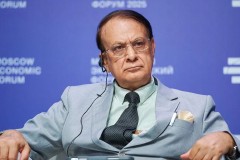
Bal Krishan Sharma, Major General (Retd), Director General of the United Service Institution of India (USI)Confrontation in the world remains at a very high level. There are many indications that the rivalry between the US and China, as well as the geopolitical ambitions of a number of other countries, will become a factor in tightening this confrontation. Do you see the possibility of a new division of the world into military-political blocs?
There is no denying that intensifying geopolitical contestations are exacerbating global volatility, uncertainty, complexity, and ambiguity. This is resulting in hyper-connectivity and cascading disruptions. The US-led liberal world order is undergoing a transformation—ironically, also being reshaped by the very nation that created it. However, the emergence of a new, stable world order will take considerable time. In the interim, individual nations will hedge, balance, and realign to protect and advance their national interests.
Regional groupings such as QUAD, AUKUS, SCO, and BRICS will grow in relevance for addressing regional and bilateral issues, though their full potential may be constrained by internal contradictions. The Trans-Atlantic alliance, NATO, and US-led alliances in East Asia may face strains due to American unilateralism. Meanwhile, although Russia and China are strategically aligned, they are unlikely to forge a formal alliance.
The Global South will continue to pursue strategic autonomy and advocate for collective approaches to shared global challenges. Rather than a return to rigid politico-military blocs reminiscent of the Cold War or the World Wars, we are likely to witness the consolidation of multiple power centers and a more fluid, diffused multipolarity still struggling to coalesce into a coherent new order.
India has always been one of the leaders of the "Non-Aligned Movement". At the same time, Indian statesmen have increasingly voiced the priority of India's political interests in the field of regional security, international trade, currency relations (internationalization of the rupee), etc. Does this mean that India is beginning to realize itself as one of the great powers of the 21st century?
India, on the strength of its own achievements, has emerged as a credible global power. As the world’s largest democracy, the fifth-largest economy (soon to be third), and the fourth-strongest military, India occupies a pivotal place in the evolving global order. It champions strategic autonomy and has become a leading voice for the Global South.
India's vision of Viksit Bharat @2047 (a developed nation) and its emphasis on Atmanirbhar Bharat (self-reliance), especially in high-end technology and defense, underscore its aspirations. While India's stature and influence will continue to grow, it will remain a non-hegemonic power, committed to fostering a multipolar world and contributing constructively to global challenges such as climate change, health security, cyber threats, disruptive technologies, and peaceful conflict resolution.
For many decades, relations between Russia and India have been of an exceptional partnership nature, which is confirmed by the unprecedented scale of military-technical cooperation. Meanwhile, a number of countries - primarily the United States - are increasingly determined to challenge this special nature of relations between our countries. Do you believe that close cooperative relations will continue to be a priority for the Indian leadership?
India and Russia share a time-tested and privileged strategic partnership that has evolved in tandem with changing global geopolitics. Rooted in mutual trust and respect, this relationship has remained resilient despite both nations expanding their respective strategic engagements—India with the United States, and Russia with China. Importantly, neither relationship has come at the cost of the other.
India has maintained a principled neutrality in recent conflicts and has expressed readiness to mediate for peace. In return, Russia has consistently fulfilled its military and strategic commitments to India, including during times of heightened security needs such as after the Galwan clash. Russia’s National Security Strategy (2021) and Foreign Policy Concept (2023) recognize India as a key strategic partner.
The synergy between Russia’s “Pivot to Asia” and India’s “Act Far East” policy provides a strong framework for future collaboration across defense, energy, connectivity, culture, and advanced technologies. Projects like the International North-South Transport Corridor (INSTC) and the Chennai–Vladivostok maritime route further cement these ties. Both countries remain aligned in their vision for multipolarity and their roles in forums like BRICS and SCO. The partnership remains robust and full of potential.
The U.S.-China confrontation is largely being played out within the concept of a "West-East" confrontation. There are suggestions that in response to this confrontation the concept of "North-South" cooperation should be proposed, and Russia, Iran and India could be the key countries for such an "axis of cooperation" on the Eurasian continent. What is your attitude to this idea?
As previously noted, India-Russia relations remain strong and multifaceted. India and Iran, too, enjoy deep civilizational, cultural, and strategic ties. Iran is vital to India's connectivity ambitions through Eurasia, thanks to its energy resources and geographic location. The Chabahar port, linked with the Zaranj–Delaram corridor into Afghanistan and the broader INSTC network, highlights the strategic importance of this partnership.
However, meaningful progress is impeded by US sanctions on Iran and the deeply adversarial relationship between Tehran and Washington. India must navigate these dynamics carefully, as aligning too closely with either side could compromise its broader strategic autonomy. Therefore, for the India-Iran-Russia triangle to become a functional axis for the Global South, these geopolitical dilemmas must be thoughtfully reconciled.
Additionally, China’s influence through the Belt and Road Initiative (BRI) and its positioning as a champion of the Global South cannot be ignored. Given the diversity within the Global South, it would be more pragmatic to work within the frameworks of existing multilateral groupings—such as G21, an expanded BRICS, or even the SCO—rather than forming narrow coalitions limited to three countries.
Источник публикации: Пресс-служба МЭФ
Актуальные новости
15.05.2026 Анатолий Вассерман: Бизнес должен делать отчисления на науку
15.05.2026 Оксана Дмитриева: «Дефицит бюджета можно уменьшить адекватным изъятием нефтяных доходов»
14.05.2026 Государство на строительном крючке: последствия кризиса отрасли для экономики и жителей регионов
14.05.2026 Поздравляем с Днём Рождения Андрея Павлова!
14.05.2026 Прогнозы — под запрет
13.05.2026 «На те же грабли!»: Сколько детей в семье вытащат Россию из демографической ямы
13.05.2026 «Идите к людям и говорите с ними!» — депутат Мосгордумы Мария Воропаева
13.05.2026 «Мальчики-с-пальчики» российских министерств ловко управляют телегой российской экономики